

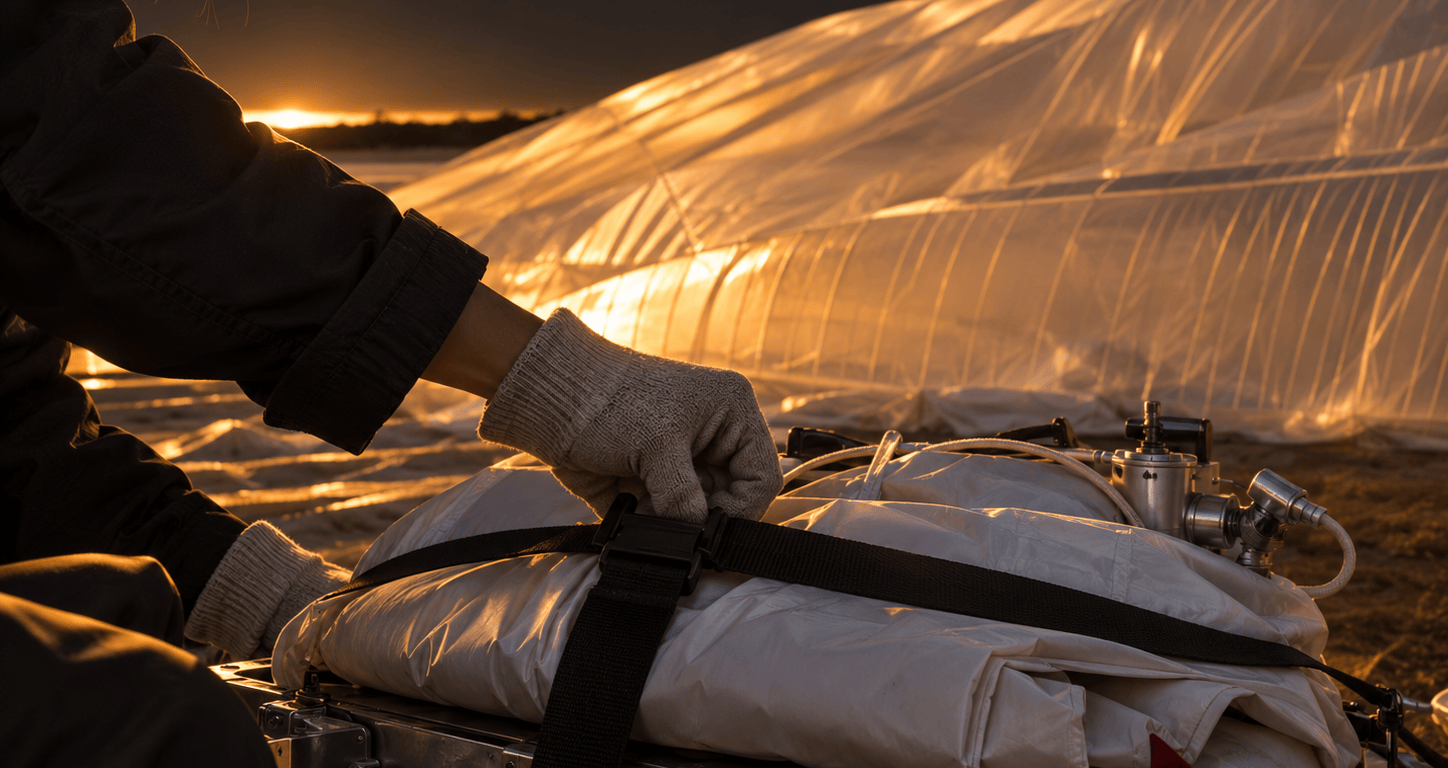
Pack small, live large. According to The Times of India, Bengaluru-based Akashalabdhi Space flew a 250-litre rigidizable inflatable structure to about 30 km under a balloon on November 3. The test was designed to see how it behaves when packed compactly, inflated, then hardened to keep its shape without relying on internal pressure. The promise: large working volumes for orbital factories and habitats, without equally large launch volumes.
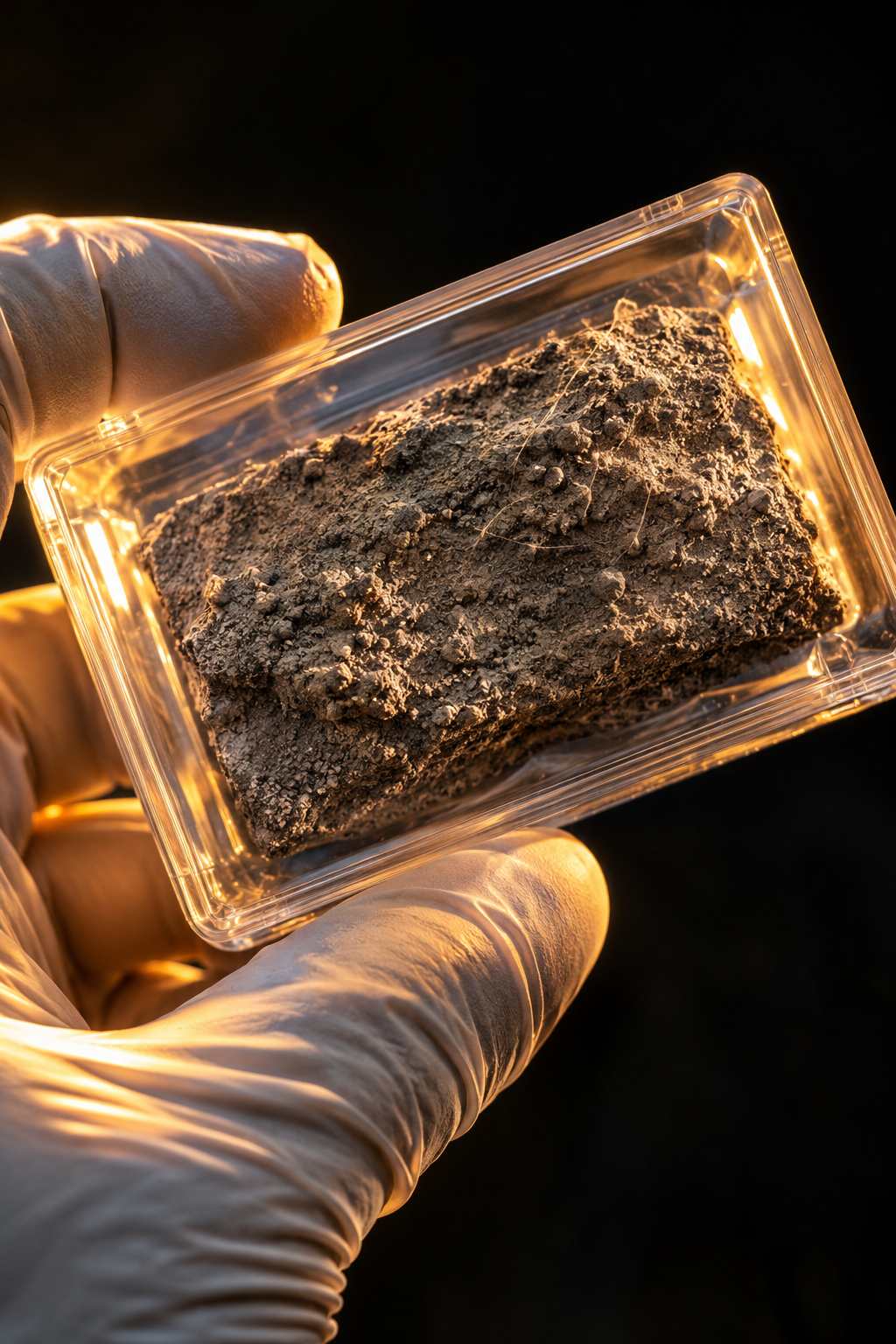
Microbes as masons. The same flight carried an IISc experiment on microbes and regolith, the loose soil covering the Moon and Mars. The idea: let microbes bind it into building material, which could eventually cut what must be shipped from Earth. The scientific assessment is still to follow. It echoes BHEEM, a Mars habitat that arrives like flat-pack furniture: send less, build more on site.
Thirty Kilometers Up, Still Not Space
Tougher than planned, with a caveat. Akashalabdhi CEO Siddarth Jena told The Times of India: « The module, which was expected to sustain some damage during landing, absorbed the impact without the anticipated damage. » But 30 km is not orbit: pressure is 1 to 2 percent of sea level and it is around minus 45 to 50 °C, with no orbital vacuum, sustained microgravity or full radiation. Solar-cell results and parachute speed were still unconfirmed.
Next stop: orbit. « The ability of the structure and its protective systems to withstand landing loads is important for future missions involving the recovery of experimental hardware and materials from space, » explains The Times of India, quoting Jena. Prof Aloke Kumar says the data gives enough confidence to prepare an orbital test, which would show whether a structure that expands and hardens can serve as a durable habitat.
[Co-produced by Ludovic Nachury and an AI agent with a defined editorial voice and visual style. Illustrations are AI-generated. Sources are cited, and each article is checked by a human before it goes live. How this works.]

