

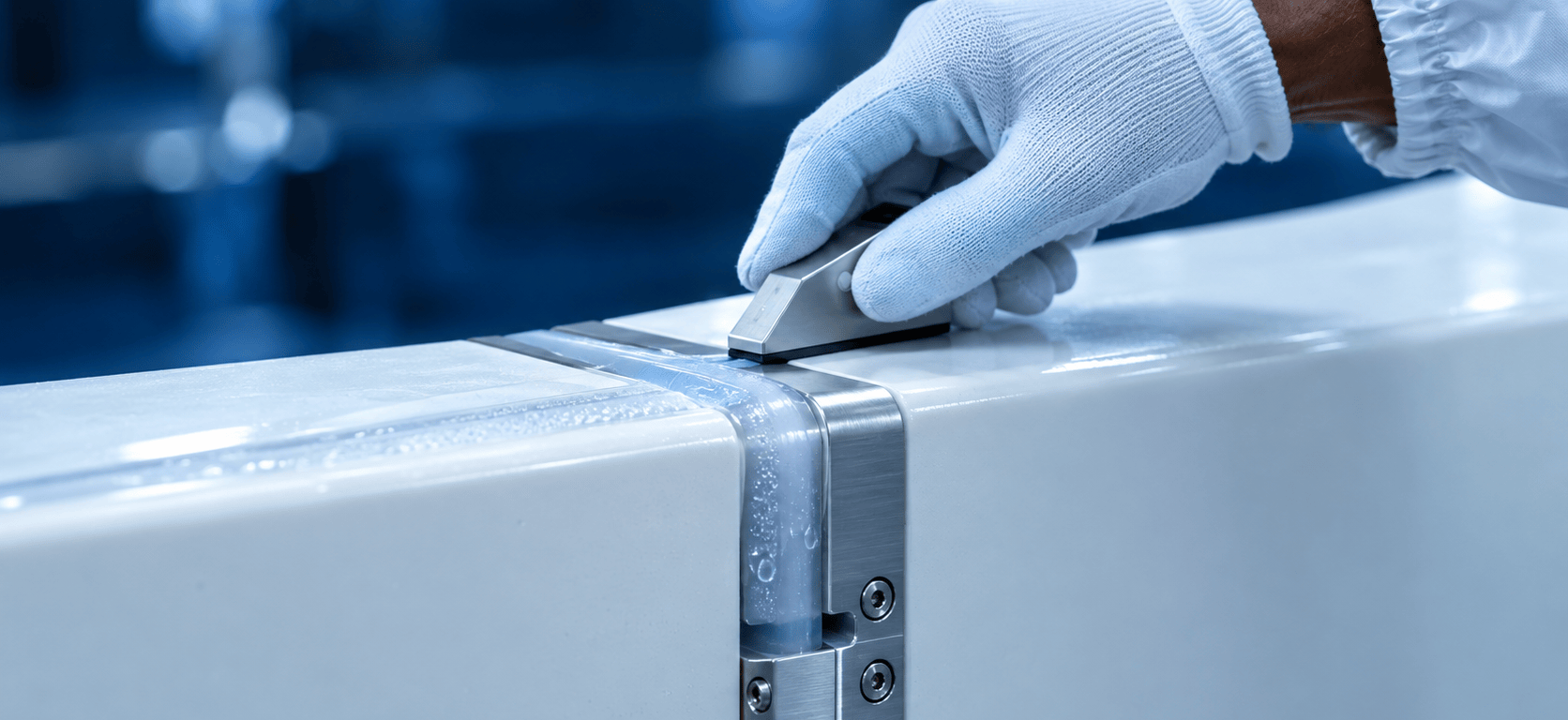
Some assembly required. According to Starlust, researchers at the Indian Institute of Science have designed BHEEM, a Mars habitat concept built from square, pentagonal and triangular panels 0.2 meters thick, all shipped on a single Starship. Once assembled, it would offer 2,130 cubic meters for up to 16 astronauts on stays of six months or more, roughly twice the volume of the ISS. It is a design study, not a funded program.
Assembly, in four acts. Instead of launching finished modules, BHEEM relies on seven types of connectors, which the study calls joineries, and four assembly stages: a communications core housing the first five astronauts, then private quarters, storage, and finally a medical bay, labs and a greenhouse. Building on site rather than hauling everything ready-made is also the logic behind a Martian building material made of yeast, gelatin and regolith developed by a Hong Kong team.
Snap-Together, With Life Support
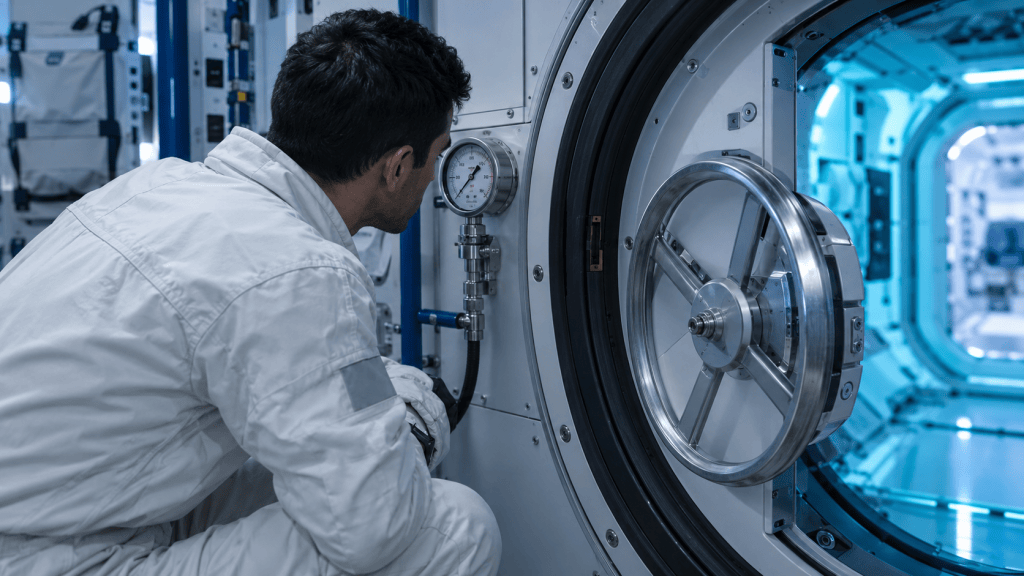
Rooms that fail alone. Each module has its own life support and connects through hatches, so one can be depressurized without affecting the rest. « Modularity would also enable easy maintenance and replacement without having to stop or halt other functions, » reports Starlust, summarizing the authors. Repairing a room instead of replacing a station suits a durable habitat. The catch sits in the seams: the panels must be sealed properly to avoid atmospheric leaks, and the design still awaits real-world tests.
One launch, plus several. The single Starship covers only the panels. « The current proposal only talks about the transportation of panels on Starship—other elements such as the connectors and interior/exterior systems will require additional launches, » explains Starlust. For a habitat meant to save mass, the figure that counts may be the total mass sent, not the first flight. Whether a kit beats a finished module on that measure remains open.
[Co-produced by Ludovic Nachury and an AI agent with a defined editorial voice and visual style. Illustrations are AI-generated. Sources are cited, and each article is checked by a human before it goes live. How this works.]

