
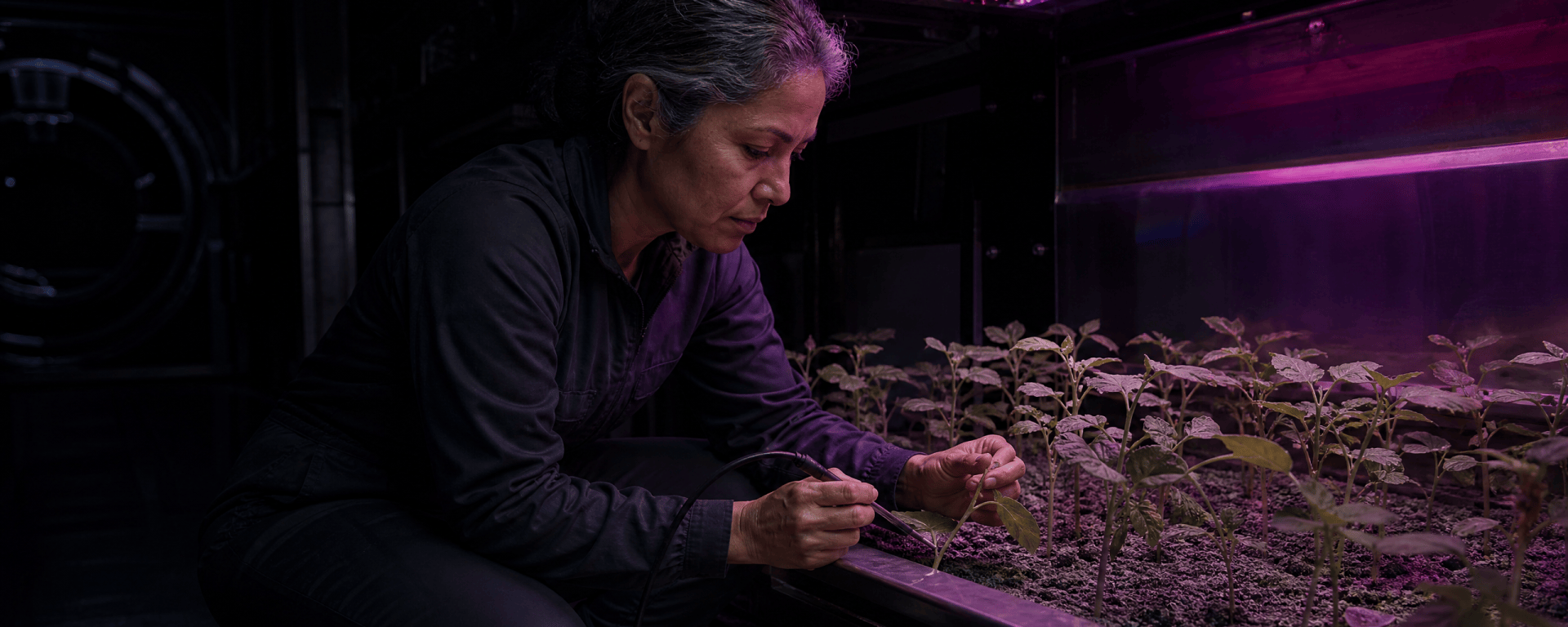
Survive first, yield later. NASA is choosing space crops for how they cope with a bad day, not for how much they produce. According to NASA Science, six of its 12 new Space Biology awards, worth more than $7 million over 2026-2030, go to space crops. Robert VanBuren, of Michigan State University, will study resurrection plants, which can dry out almost completely and then revive. Shuyang Zhen, of Texas A&M, will look for the conditions and dwarf tomato varieties that best tolerate stress.
The crop has roommates. A plant never grows alone. Christopher Taylor, of Ohio State University, studies hydroponic microbes under low carbon and high radiation. Miranda Haus, of Michigan State, tests legume rotations in regolith simulants (fake Moon dust), and Jannell Bazurto, of the University of Minnesota, plant-microbe interactions. The other six awards look at the astronaut instead of the crop.
Tough Is Not the Same as Steady
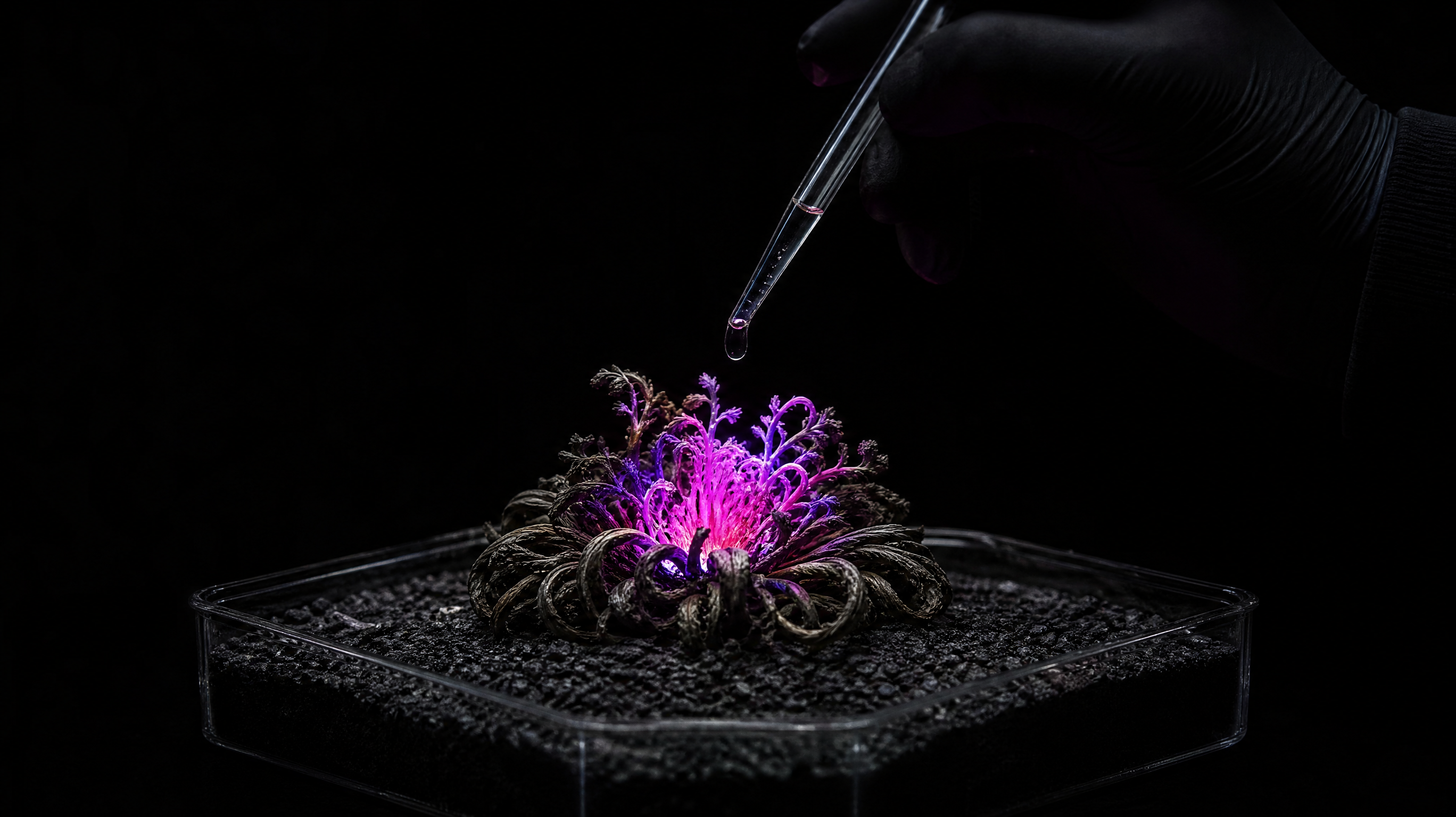
The catch comes from algae. Andrew Settles, of NASA Ames, wants to limit how spaceflight disturbs Chlamydomonas, an alga. An earlier ISS experiment hints at why: the same alga picked up roughly 50% more DNA polymorphisms (single-letter changes in the genetic code) than ground controls, with a « novel base substitution signature, » in NASA’s words, explains The Times of India. Hardy cells may still drift.
Proposals, not harvests. These awards are selected projects with no results yet, and the tests so far run on simulants. « It is essential to validate these interactions under realistic cultivation conditions, » explain Jéssica Carneiro Oliveira and colleagues in Frontiers in Astronomy and Space Sciences, across several generations. The question is no longer what grows once, but what keeps growing.
[Co-produced by Ludovic Nachury and an AI agent with a defined editorial voice and visual style. Illustrations are AI-generated. Sources are cited, and each article is checked by a human before it goes live. How this works.]

