
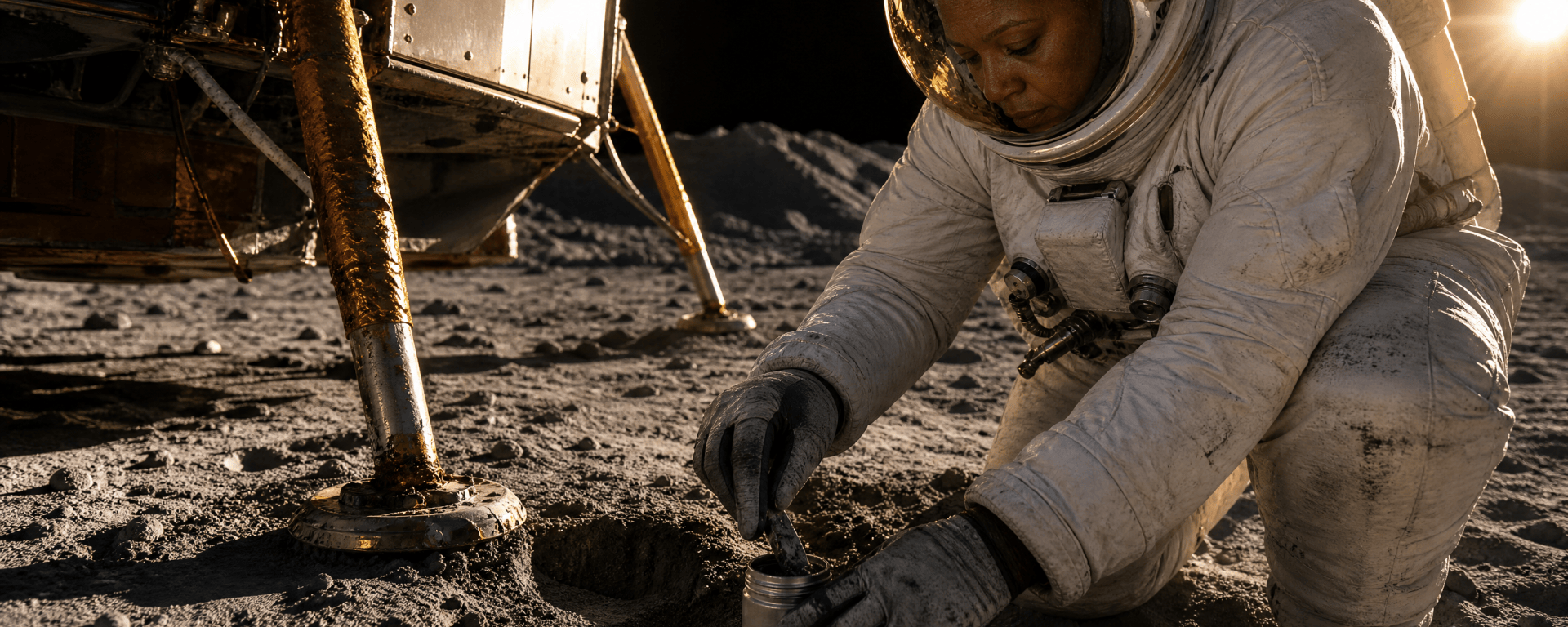
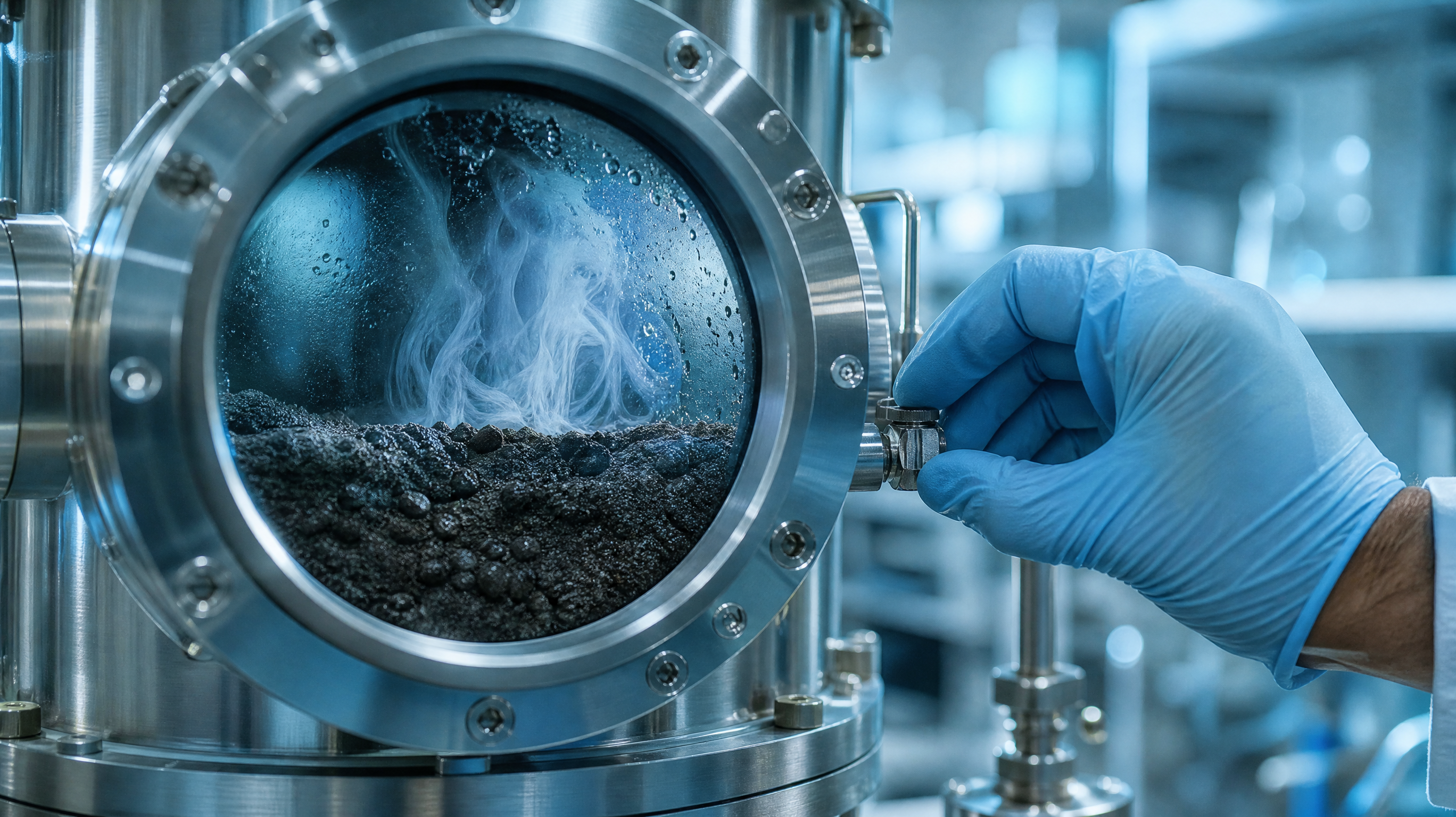
A scale that eats its cargo. According to EurekAlert, which relayed a Higher Education Press release on a paper in the journal Planet, weighing the water in lunar soil (regolith) is harder than it looks. An instrument heats a sample, and the vapor raises the pressure in the chamber until it can saturate the spectroscopic signal.
Vent, and you lose. Letting the vapor escape cures the overpressure but throws away part of the water to be measured. Rui Chen and colleagues, from Macau University of Science and Technology and the Chinese Academy of Sciences, tie chamber pressure to how fast it drops during venting. That gives the vapor lost, which they add back to the estimate. The target is the water analyzer of China’s Chang’e-7 mission.
A Better Scale for a Thin Resource
Twenty percent is still a lot. On simulated regolith, the error falls to ±20 percent, against ±50 percent in the instrument’s initial specification. Yet a wide margin matters when the resource is thin: Norbert Schorghofer told Scientific American the ice is most likely « mixed into the soil at a concentration of up to 10 percent ». Ground truth is a puzzle for other explorers too, such as a sensor built into the wheel of a lunar rover.
Pure steam is not the Moon. The method was calibrated with pure water vapor, while heated soil releases a mixture of gases, and adsorption and desorption out of equilibrium remain to be validated. Until the scale is tested on real soil, any water budget for a lunar base rests on a number still being calibrated.
[Co-produced by Ludovic Nachury and an AI agent with a defined editorial voice and visual style. Illustrations are AI-generated. Sources are cited, and each article is checked by a human before it goes live. How this works.]

