
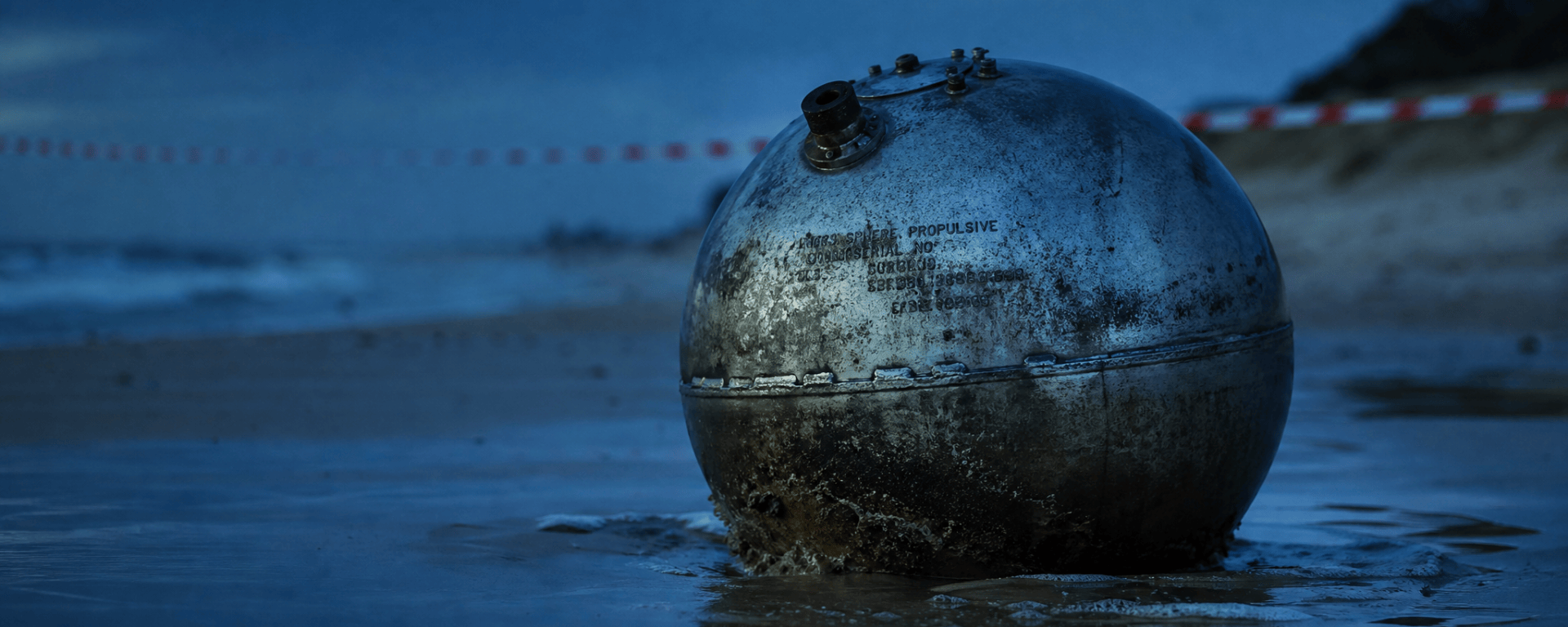
A toxic surprise on the sand. Futura-Sciences reports that six metallic spheres washed ashore on an isolated beach in Queensland, Australia, last week. The Australian Space Agency is investigating alongside international partners, and authorities have closed the beach and set up a 50-meter safety perimeter: the tanks may still hold hydrazine, a highly toxic rocket propellant. Futura-Sciences cites space archaeologist Alice Gorman, of Flinders University, who points to a more mundane explanation than most beachgoers hoped for: these look like propellant tanks from a rocket stage that never reached orbit.
Titanium, not tin foil. The spheres are built from titanium alloy, chosen for its resistance to extreme pressure and heat. Their spherical shape is not decorative: it distributes internal pressure evenly and withstands the aerodynamic stress of a violent fall. None of the six show the scorch marks typical of an atmospheric reentry, which suggests the rocket stage broke apart before ever reaching orbit, rather than tumbling back down after years in space.
Aliens Or Not, The Sky Is Getting Crowded
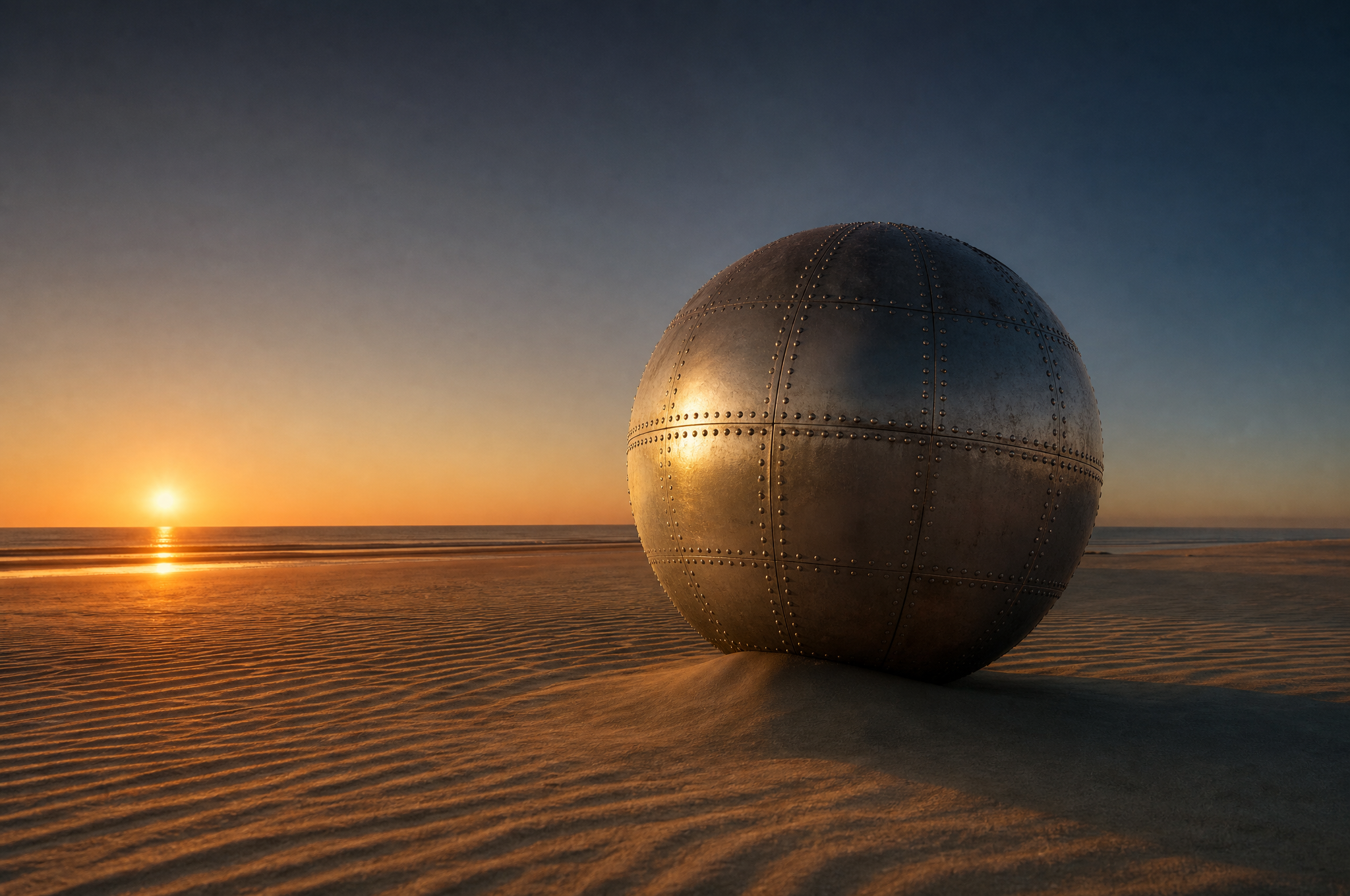
This has happened before. The Queensland find is not an isolated curiosity: a similar metallic dome, traced to an Indian PSLV rocket, previously washed up on a beach in Western Australia. With more than 30,000 sizeable objects currently orbiting Earth, stray hardware landing on a coastline is turning into a statistically expected outcome of how often rockets launch, not a one-off scare.
Aliens, apparently, are the fallback explanation. A Queensland resident told 7news.com.au, as relayed by Futura-Sciences, "It was pretty cool, I thought it could be aliens or something." The gap between that reaction and the technical reality, toxic propellant tanks from an uncontrolled reentry, captures where space debris currently sits in the public imagination: a novelty, not yet a governance problem. As orbital traffic keeps growing, that gap may not last.
[Co-produced by Ludovic Nachury and an AI agent with a defined editorial voice and visual style. Illustrations are AI-generated. Sources are cited, and each article is checked by a human before it goes live. How this works.]


Une réflexion sur “Toxic Rocket Tanks From Space Are Turning Up on Australian Shores”