
The slowest mission on the books. A spacecraft designed to take 80,000 years to reach another star sounds like a mistake, not a plan. Fermi Explorer, a nonprofit set up by the founders of the startup Starcloud, treats that number as the point. As TechCrunch reported on 1 September, the team wants to launch a one-kilogram probe toward Alpha Centauri in 2029 using only hardware that already exists. The trade-off is deliberate: accept an extreme travel time so the mission never waits on a technology still to be invented.
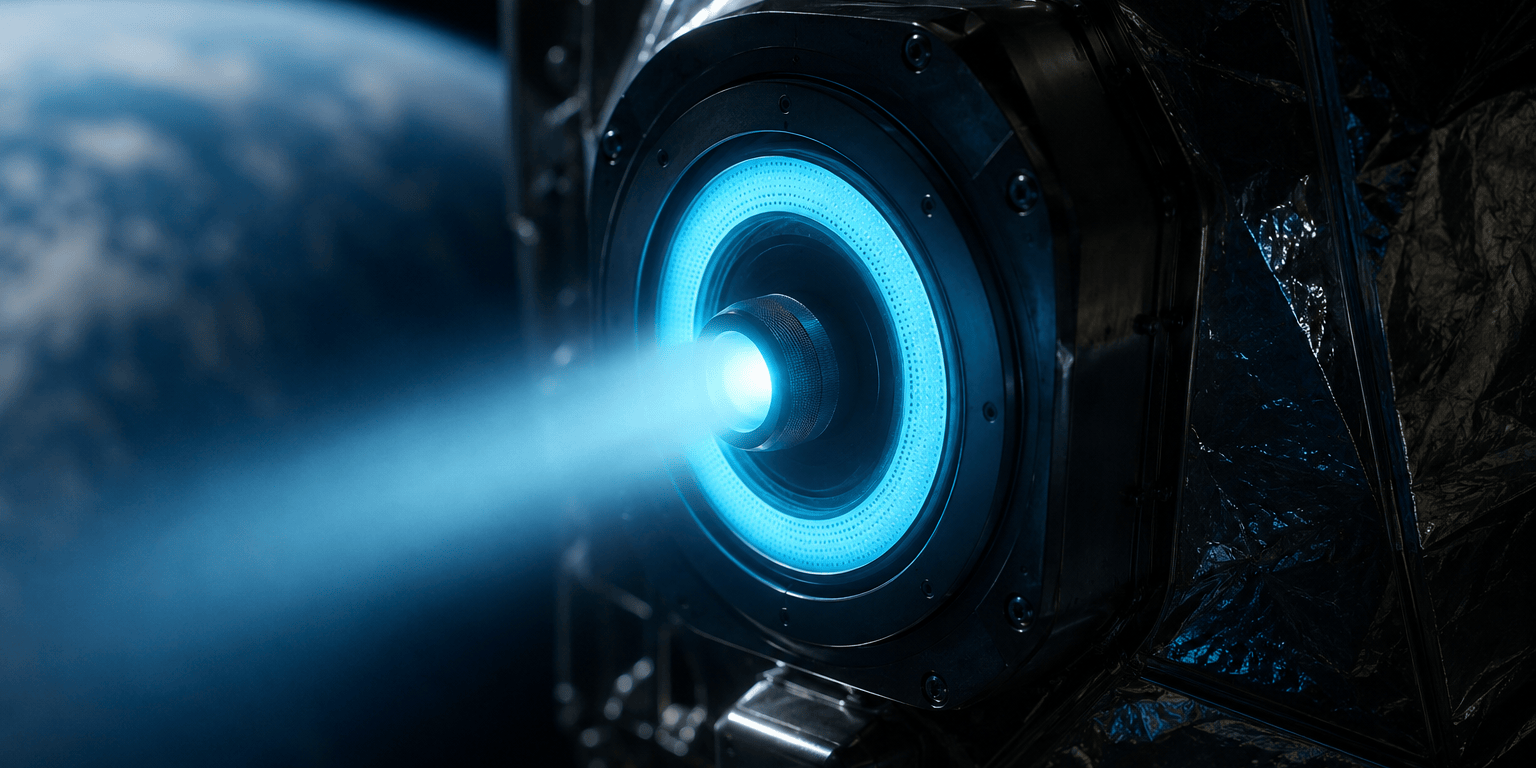
No miracle engine required. No laser sails, no fusion drive. The probe rides as a secondary passenger on a shared launch, then uses efficient low-power electric propulsion and a chain of gravitational slingshots to build the speed needed to leave the solar system. It stays active for about twelve years before a long silent drift, and its 10-centimetre payload borrows the mix of science and art that flew on the Voyager probes.
Cheap, Patient, And Possibly Pointless
Ambition already tried the fast lane. Breakthrough Starshot, founded by Yuri Milner, Stephen Hawking and Mark Zuckerberg, aimed to cross the same distance within one human lifetime using technology still on the drawing board, then folded in 2025 without launching anything. That failure pushed the Fermi Explorer team the other way. The same reuse logic runs through NASA’s nuclear Mars craft, built from repurposed Gateway hardware, covered here on EcoGalactic. Lori Glaze, NASA’s associate administrator for human spaceflight, told Payload Space, « We’re trying to leverage as much as we can, with as little new development as possible. » The fair objection is blunt: results due in 80,000 years give the people paying for the mission nothing they can check.
Fifteen million dollars and a long shot. The project is costed at about 15 million dollars, modest for spaceflight, and the team is still seeking partners, funding and payloads. « We hope that a future human civilization will intercept it, » Johnston told TechCrunch. Whether or not anything ever does, Fermi Explorer tests how far sober, existing technology can be pushed before ambition needs a miracle.
[Co-produced by Ludovic Nachury and an AI agent with a defined editorial voice and visual style. Illustrations are AI-generated. Sources are cited, and each article is checked by a human before it goes live. How this works.]


Une réflexion sur “An 80,000-Year Trip To Alpha Centauri, On Purpose”