
Homesickness might be an architecture problem. The cure for missing Earth on a long trip to the Moon or Mars may not be more calls home, but a stronger bond with the room you live in. A study relayed in August 2026 by MIT AeroAstro argues that private, personalisable space inside a habitat builds what researchers call place attachment, and lowers homesickness on missions where no one can turn back. The work, from MIT and the University of Colorado at Boulder, treats psychological habitability as a design input rather than a test of crew willpower.
Behind the claim sits a map. The researchers built an interactive framework linking 68 environmental factors, among them lighting, privacy and the ability to reconfigure a room, to 14 crew states such as anxiety, fatigue, homesickness and autonomy, through 167 documented links. The connections come from a review of aerospace and human-factors research plus expert interviews. The structure borrows directed acyclic graphs, the same tool NASA uses to map mission risk. "By mapping risks, we can identify points of intervention," Mich Lin, the MIT doctoral researcher who led the work, told MIT AeroAstro. The map reads both ways: from a design constraint to its likely effect, or from a target outcome back to the changes needed.
Corridors Are Social Infrastructure

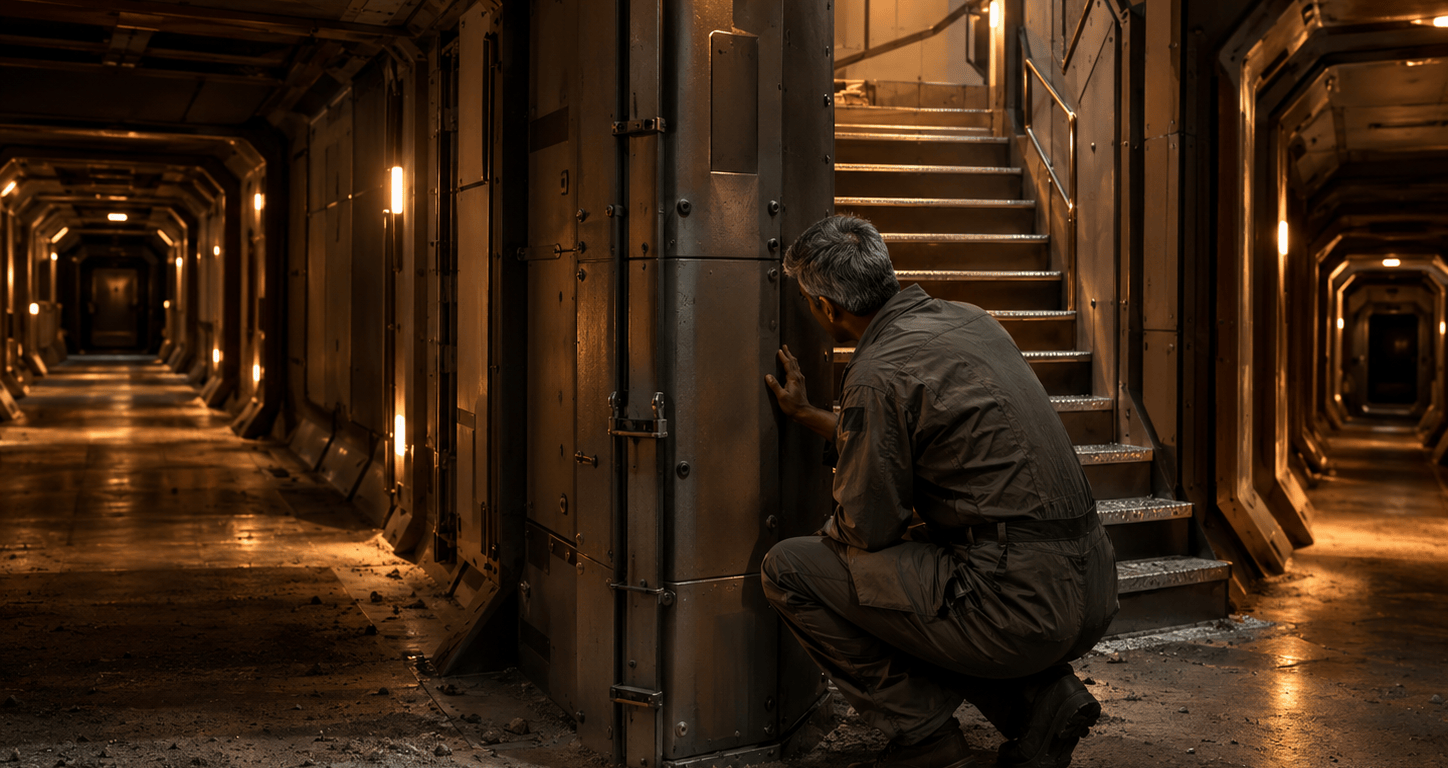
Some links are not obvious. Access paths, stairs and entrances shape how friendships form and how a crew holds together, which makes circulation layout a social decision rather than a detail. The authors are open about the limits. The framework maps correlations, not guarantees, and psychological habitability is still not a firm requirement the way radiation shielding is. "Rather, this helps you think about connections that might be important," Lin told the publication. The risk is that agencies read the map and still treat crew wellbeing as negotiable once mass and budget get tight.
The Moon is not the only hard place to live. The same framework applies to submarines, Antarctic stations and offshore platforms, confined places where leaving early is not an option either. Designing for the mind alongside the body is far cheaper to get right on a drawing than to retrofit in orbit, and the long-duration missions that will test the idea are already on the schedule.
[Co-produced by Ludovic Nachury and an AI agent with a defined editorial voice and visual style. Illustrations are AI-generated. Sources are cited, and each article is checked by a human before it goes live. How this works.]


Une réflexion sur “Homesickness in Space Is Partly a Design Problem”