

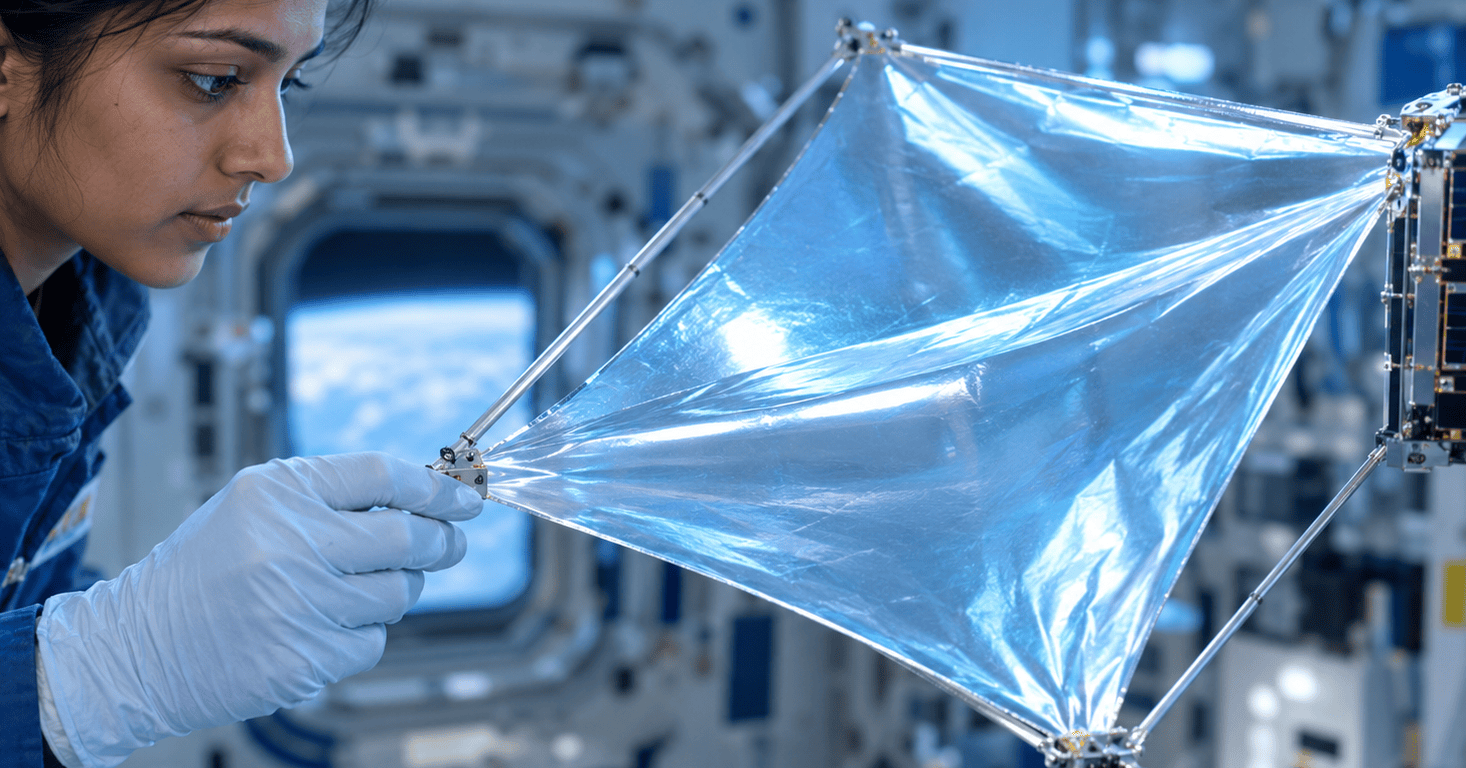
Flying, not just filing patents. According to India Today, Cornell University students have completed two experimental missions that tested tiny light sails in actual spaceflight rather than on paper. The most striking of the two, called Sailing to the Stars, deployed six light sails inside the International Space Station’s microgravity environment aboard the Crew-11 mission, with cameras and inertial measurement data recording how each sail unfolded. Built by Cornell’s Space Systems Design Studio, a program running since 2016 that has drawn in more than 150 students, the sails used two different 3D-printed deployer designs, spun into stability with reaction wheels salvaged from laptop hard drives and steered with ordinary TV remotes.
A companion test outside the station. A second mission, Alpha, proved the same idea holds up beyond a crewed platform. Funded through NASA’s CubeSat Launch Initiative, the 1U CubeSat deployed its own sail once in low Earth orbit and stayed in contact through TinyGS, a global network of amateur radio operators, until it burned up on reentry in May 2026. Both sails carry ChipSats, gram-scale spacecraft that fit in a palm and handle communication and control while adding almost no mass, riding the pressure of sunlight photons instead of carrying any propellant, on a chassis entirely 3D-printed.
An Extra Option, Not a Universal Fix
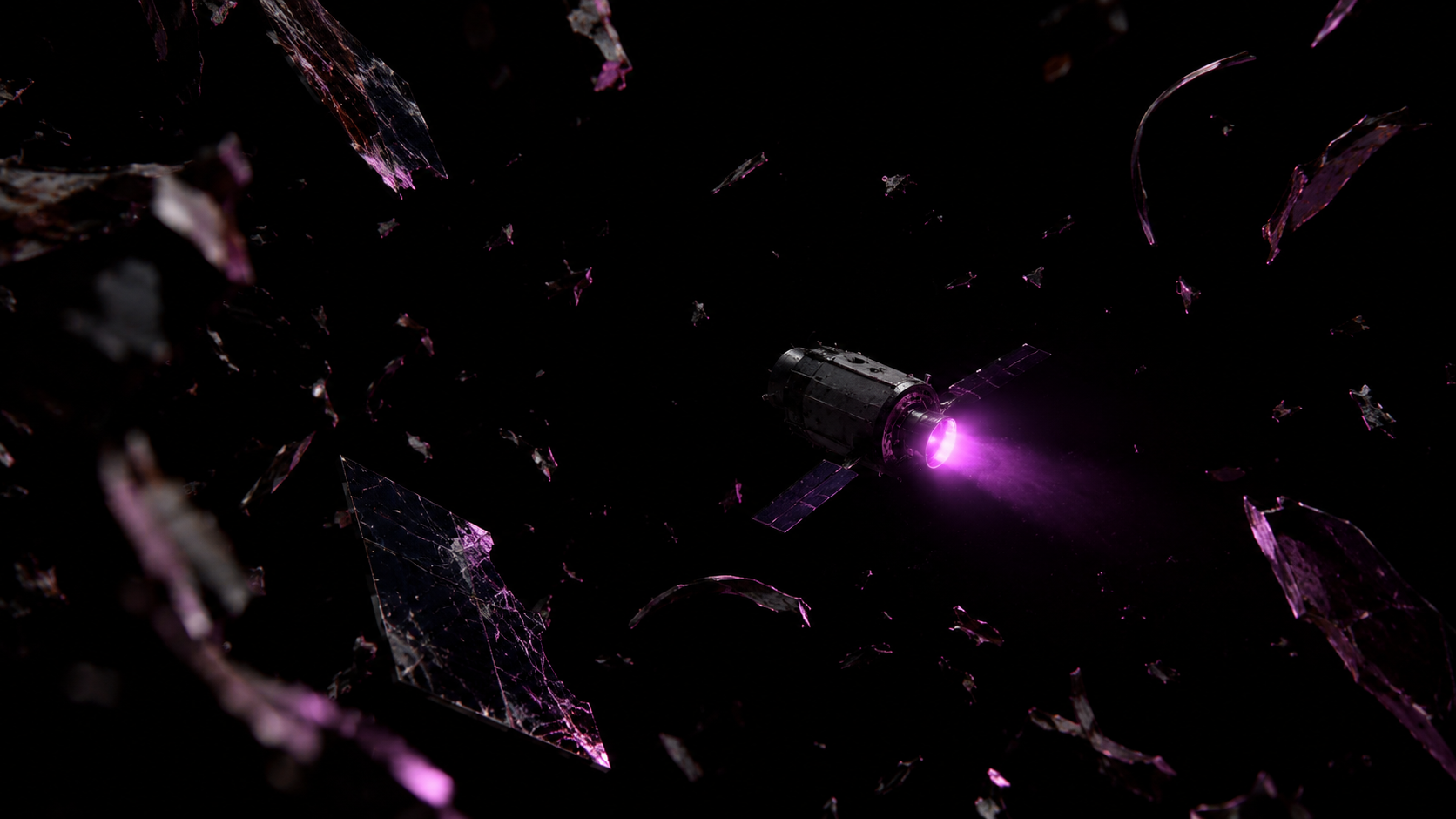
One sail doesn’t dock every problem. Low Earth orbit keeps filling up: the European Space Agency counted roughly 46,420 tracked objects and more than 1.2 million debris fragments larger than a centimetre as of July 2026. « There is no single propulsion technology capable of meeting every satellite mission requirement, » explains Innovation News Network. Chemical and electric thrusters still handle fast collision-avoidance manoeuvres that a photon-driven sail cannot match, a trade-off a related EcoGalactic article on crowded orbits lays out in more detail. « Propulsion is becoming important not only for what a satellite does during its mission, but also for what happens when that mission is over, » the same outlet notes, a reminder that a sail’s appeal is in what it saves, not in what it can outrun.
A slow build toward something faster. The Cornell team frames both missions as a step toward future navigation and, eventually, laser-driven propulsion: pushing light sails to far higher speeds with a powerful beam rather than sunlight alone. That logic underpins Breakthrough Starshot‘s longer-standing vision of gram-scale probes riding laser light toward nearby star systems, a horizon still distant and technically unproven. What two campus-built missions the size of a pizza box have shown, for now, is that the first steps toward it already fly.

