
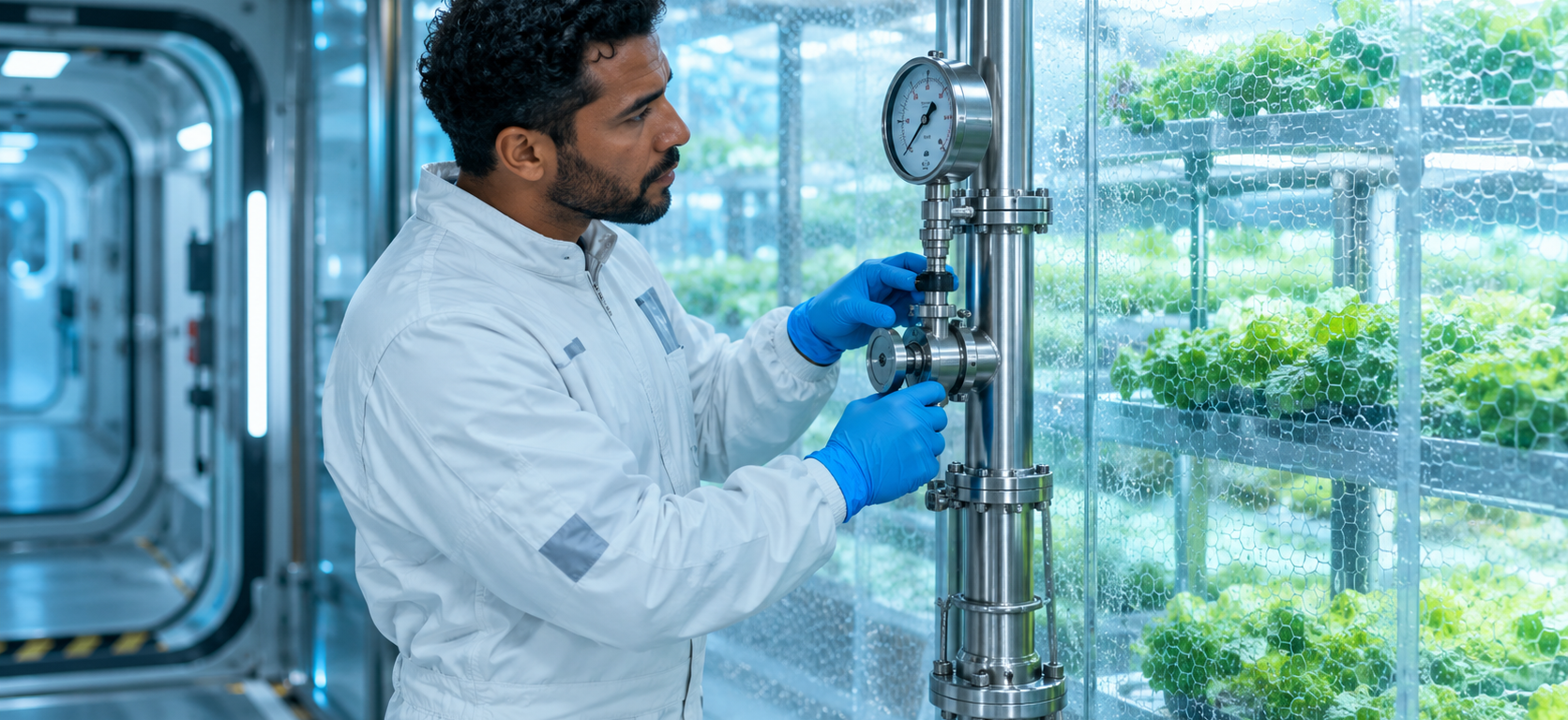
Salad, with a door. The next lunar base may come with its own vegetable patch. According to Universe Magazine, NASA, the Canadian Space Agency and Germany’s aerospace center DLR will prepare a ground prototype called LAM-GTD: a dense-crop greenhouse linked by an airlock (a chamber that sets pressure and gas mix) to HabSim, a simulated crew habitat. The goal is to test how oxygen, carbon dioxide and water move between plants and people. The August 2026 deal covers preparatory work only: the decision to build comes later, with a 2032 target if it goes ahead.
Thin air, by design. The tests aim at a pressure near the 56 kPa (a unit of pressure) NASA has studied for lunar habitats, against 101 kPa on Earth and about 30 kPa in a spacesuit. A smaller gap means less time breathing pure oxygen before a spacewalk, to flush nitrogen from the blood and avoid decompression sickness. Plants absorb carbon dioxide, release oxygen and return water, so part of the life-support load shifts to them.
Antarctica Never Tested Thin Air
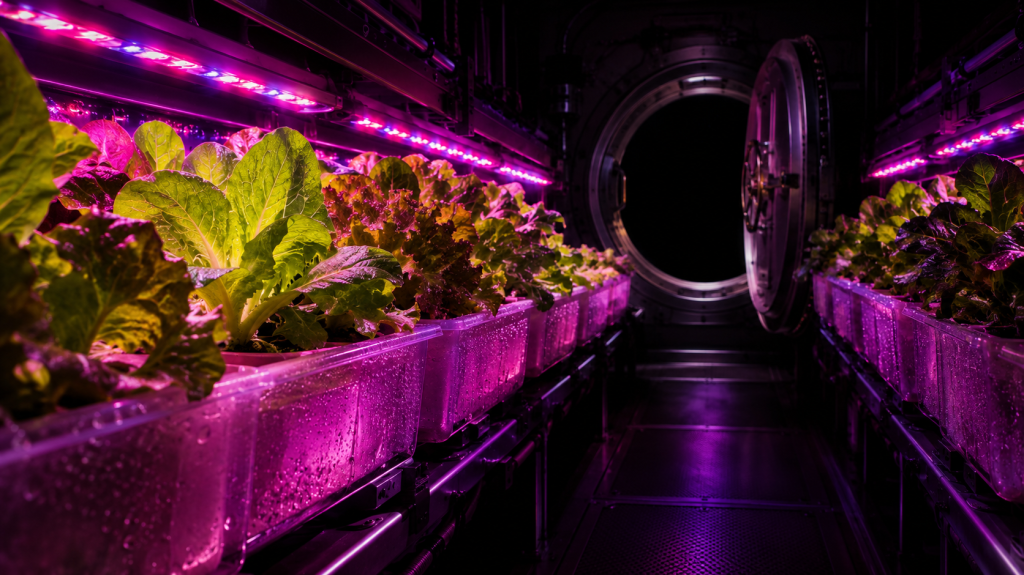
The cold-case problem. DLR’s EDEN ISS greenhouse in Antarctica logged five years of data on electricity and water, figures a lunar base will need. The catch? « All of these data were obtained under normal Earth pressure, » explains Universe Magazine. The prototype is meant to show what changes in thin air. A Florida lab that turns human waste into plant food carries a similar caveat: pak choi grew, but no yield figures, no crew-sized volumes.
Not a menu overhaul. « Fresh greens will not replace astronauts’ usual diet but will supplement it, » explains Universe Magazine. Packaged rations stay the base, yet DLR stresses crew well-being. On Earth, similar designs could give arid regions water-saving greenhouses. A base built to last needs variety on the plate as much as calories.
[Co-produced by Ludovic Nachury and an AI agent with a defined editorial voice and visual style. Illustrations are AI-generated. Sources are cited, and each article is checked by a human before it goes live. How this works.]

