

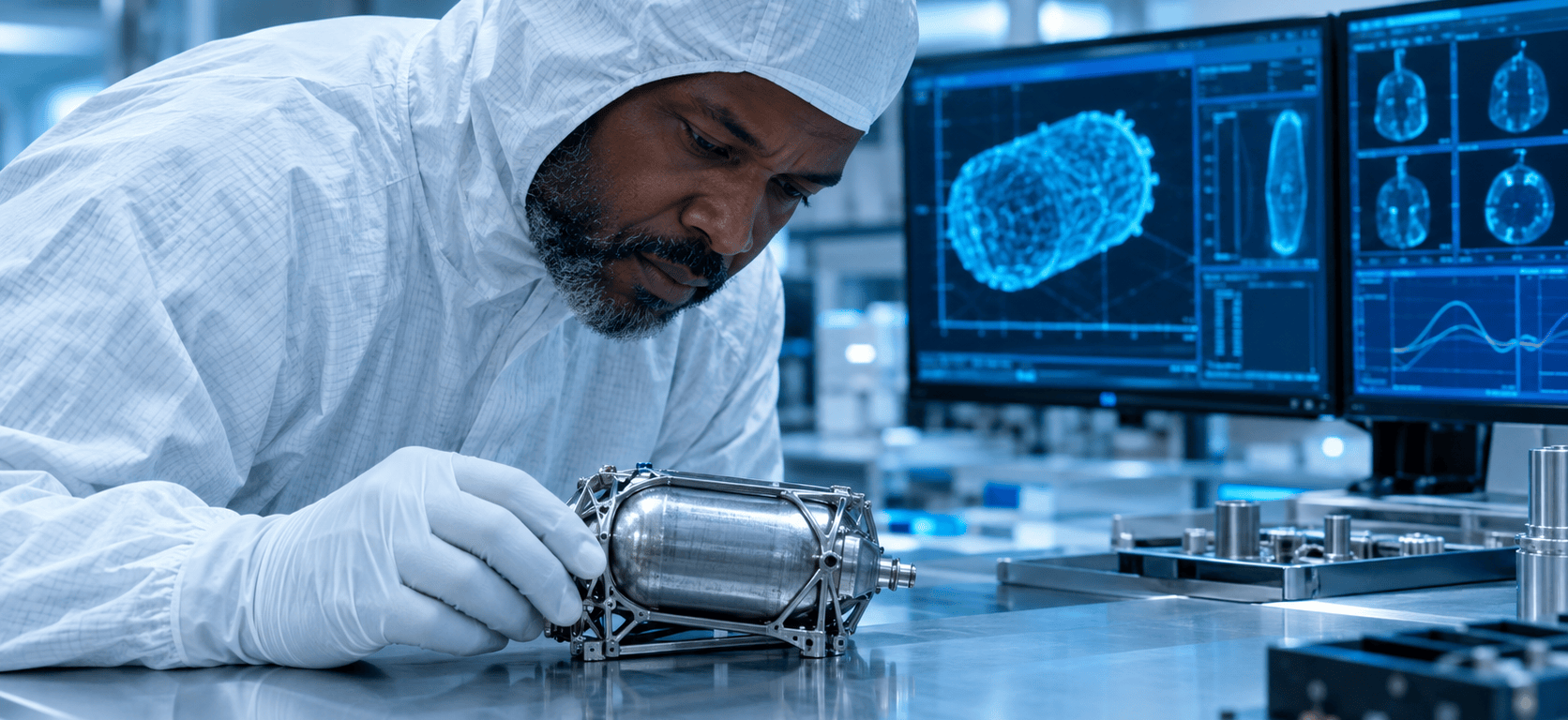
Printing is the easy part. Making a metal rocket part with a 3D printer is no longer the hard step; proving it will hold is. That is the bet behind DIQAM, a 12-month project led by the company amsight within ESA’s FIRST! programme since September 2026, according to Quality Magazine. In the announcement it carries, CEO Tim Wischeropp says the market’s next challenge is « not simply producing [3D-printed] parts, but proving them efficiently, consistently, and with data that can be reused. »
Paperwork with a payload. Today, vetting a printed part means static reports, CT scans (X-ray images of the inside of the metal), companion test specimens, and evidence pulled together by hand. DIQAM would link data on powder, machine, post-processing, scans and mechanical tests in one digital qualification file, backed by a space reference specification and a software prototype. Gathering that proof for a single part can take several hours, and APWORKS CTO Andreas Funcke says in the same announcement: « With DIQAM, we aim to reduce this effort to just one click. »
The Fine Print Behind One Click
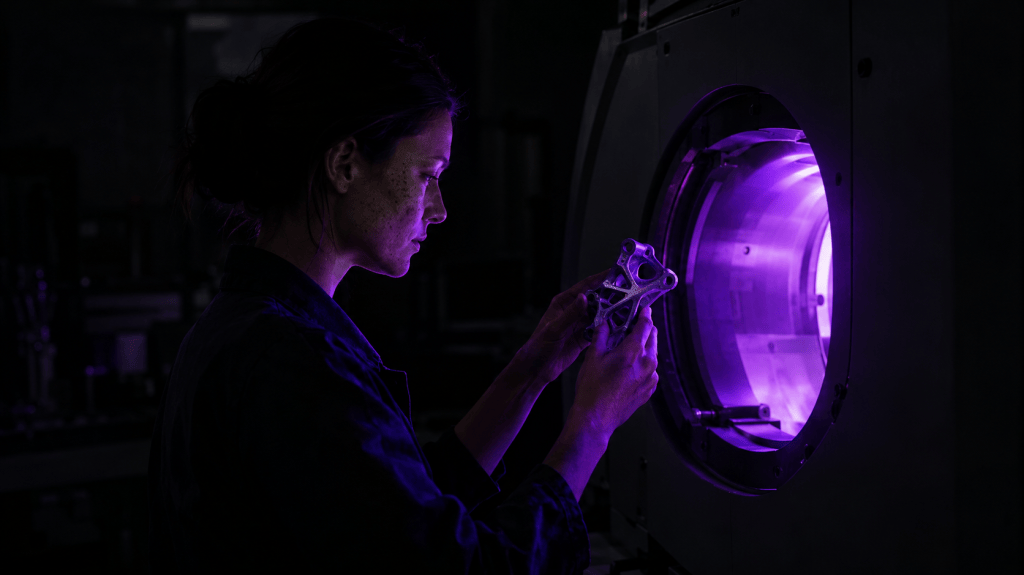
Compiled, not conjured. A click gathers proof; it does not produce it. The scans and mechanical tests still have to happen; their results simply land in the same file. Two demonstrators will put the framework to work: an ArianeGroup container for Ariane 6 and an ISPTech propellant tank for a CubeSat. It matters more as parts get printed closer to where they are used, because a part nobody can vouch for is just expensive scrap.
Twelve months to go. DIQAM promises a specification, a digital file and a software prototype, not a certified standard. Space that lasts needs parts that can be trusted, reused and repaired, and that trust is built in paperwork before the metal. By the end of those twelve months, the project will show whether that idea holds.
[Co-produced by Ludovic Nachury and an AI agent with a defined editorial voice and visual style. Illustrations are AI-generated. Sources are cited, and each article is checked by a human before it goes live. How this works.]

