
Cold, dark, and picky about coolant. Pour la Science reports NASA wants a nuclear reactor running on the lunar surface by 2030, announced by then-acting administrator Sean Duffy as a matter of national security. Solar power can’t survive the moon’s two-week night, making a reactor the only realistic option, but that reactor can’t rely on the one coolant every terrestrial plant depends on. Water freezes solid or turns to explosive steam across swings from 121°C to –133°C, forcing the entire cooling strategy to be reinvented. « It’s the only way we can sustain a lunar base properly long-term, » Simon Middleburgh, co-director of the Nuclear Futures Institute at Bangor University, told Scientific American.
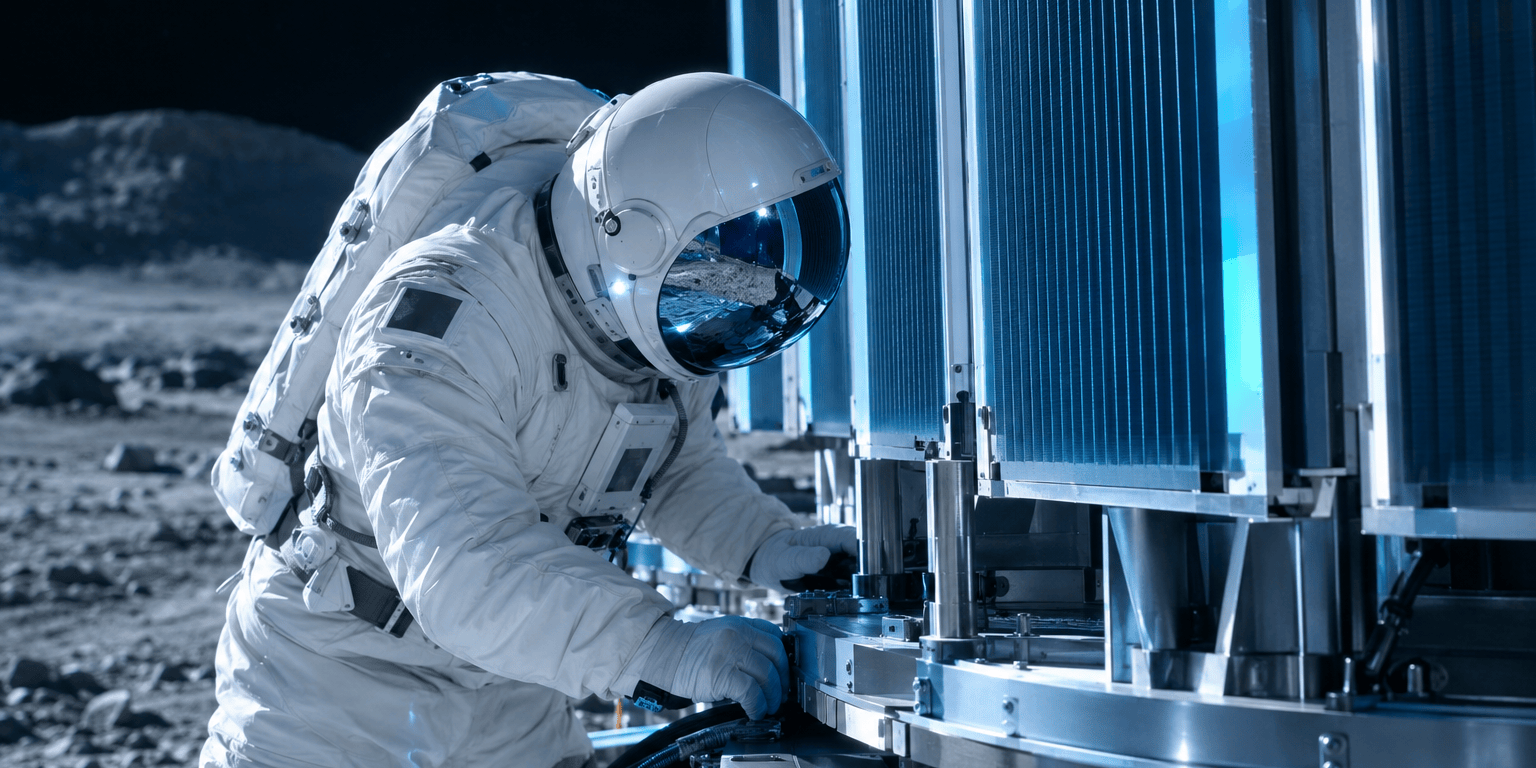
No water, no problem, mostly. Engineers plan to pump air from Earth through the reactor instead, then vent leftover heat through giant finlike radiator sails stretched into the vacuum. Fuel is packed into TRISO pellets, uranium grains sealed inside a ceramic shell tough enough to survive a crash landing intact. None of this gets its first real test on the moon: NASA plans to fly the same fission technology first, aboard SR-1 Freedom, a nuclear-electric spacecraft bound for Mars by 2028.
One Reactor Already Fell Out Of The Sky
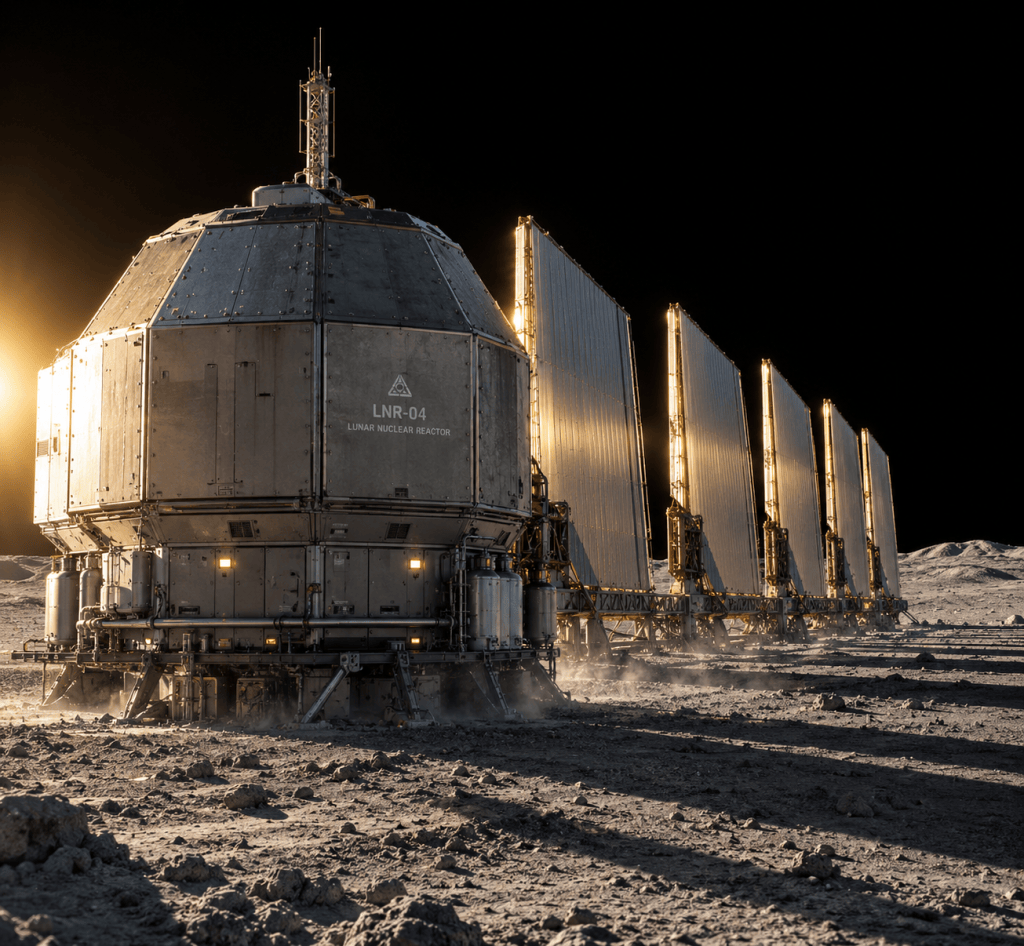
Canada already cleaned this up once. In 1978, a Soviet reactor aboard the satellite Kosmos 954 broke apart on reentry and scattered radioactive debris across 15,000 square miles of northern Canada, the only real precedent for nuclear hardware failing badly off-planet. Designers now worry less about the reaction itself than about what happens before it switches on. A lunar meltdown wouldn’t threaten the crew through radiation, but it would leave « a large, radioactive hunk of metal sitting there, » Katy Huff, a nuclear engineer at the University of Illinois and former U.S. assistant secretary for nuclear energy, told Scientific American, a hazard nobody could approach for generations.
Two nations, one clock. The United States targets 2030 while China and Russia work on a joint reactor for their own base at the lunar south pole by 2035, turning a coolant problem into a quiet contest over who sets the rules first. Whichever switches on first, none of that changes the question that matters most, in Middleburgh’s own words: what happens if it goes wrong.
 The EcoGalactic Gazette