

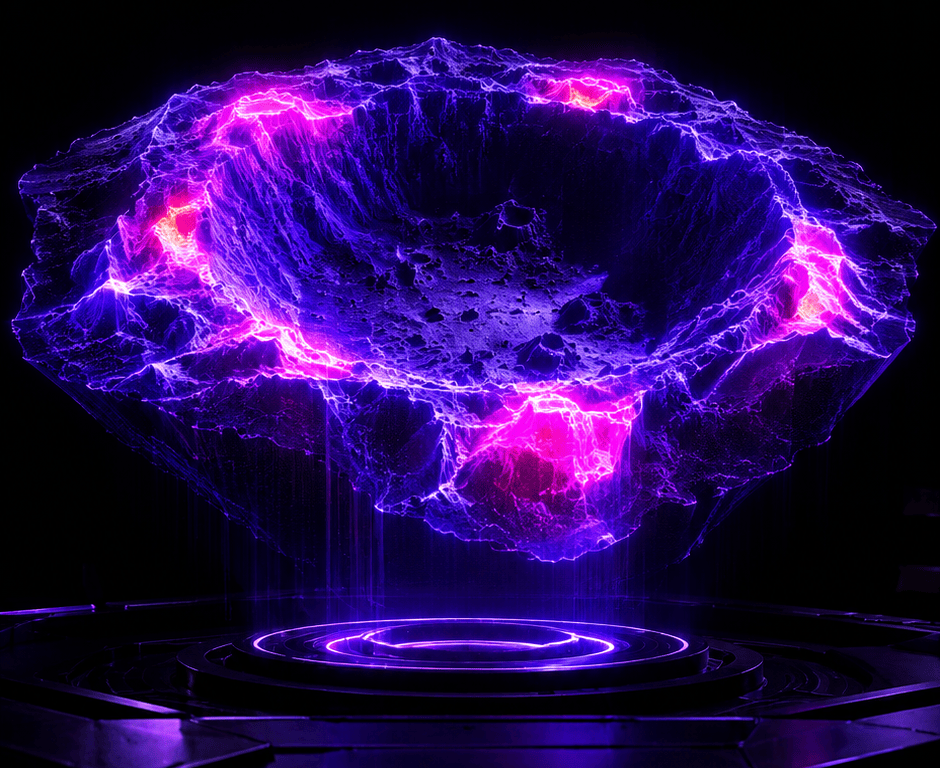
A map beats a guess. According to The Economic Times, an open-source AI model built by NASA and IBM has made lunar prospecting measurably sharper: on benchmark tests, the Lunar Foundation Model cuts the error rate for spotting polar ice by 22 percent against standard methods, matching or beating models built only to map craters. The gain comes from reading more than thirty layers of data, from nine instruments and four missions, chiefly the Lunar Reconnaissance Orbiter, together rather than one at a time.
Old data, new eyes. The model trains on roughly two million image tiles, most of them high-resolution frames at one-meter scale, plus data from the GRAIL and Lunar Prospector missions and Japan’s SELENE probe. It joins IBM and NASA’s open Prithvi family of geospatial AI, built on an architecture developed with the European Space Agency, with a short job list: map small craters, trace the Moon’s volcanic past, and screen the poles for ice.
A Sharper Map Is Not a Confirmed Puddle
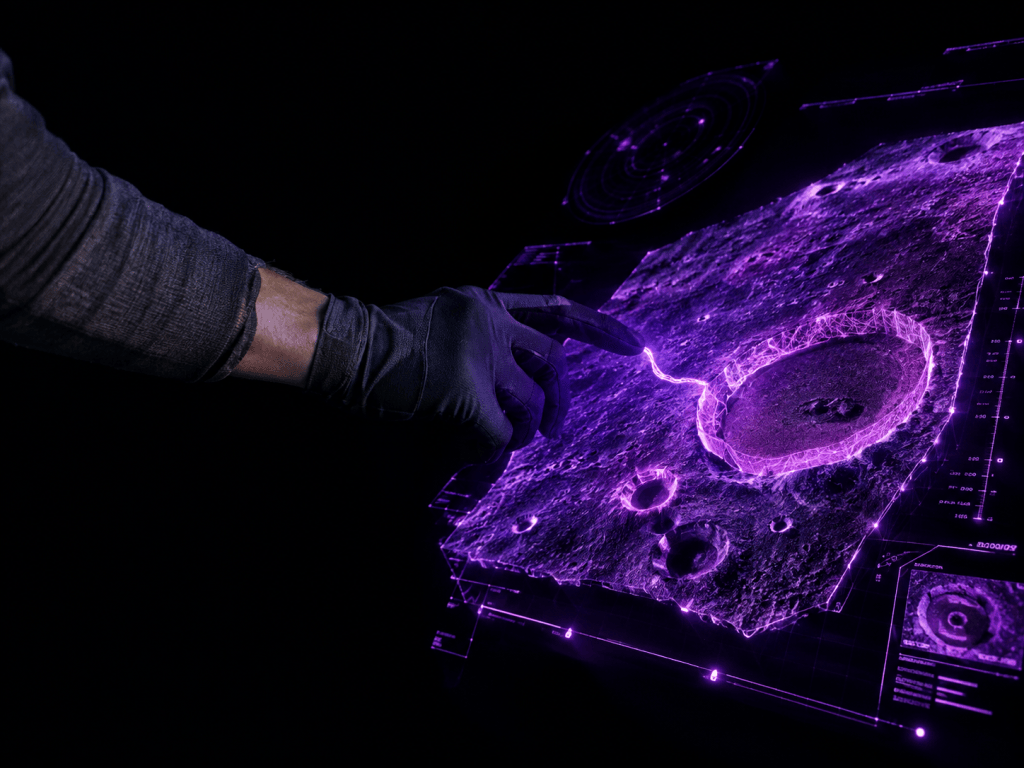
Confidence is not proof. The catch: the model delivers probability, not certainty, and the true age and extent of these polar formations is still debated within NASA itself. Kevin Murphy, NASA’s chief science data officer, said the model is about « turning large-scale data into new discoveries. » Juan Bernabé-Moreno of IBM Research said it should help scientists « get the lay of the land » before the next crews head out. Orbital confidence still needs ground truth, the kind a legged Chinese probe headed for the Moon’s permanently shadowed craters is built to collect by touching the ice itself.
Why bother mapping it. The search matters past cartography: confirmed ice could become drinking water, breathable oxygen, and rocket propellant, the basis of a lunar economy that resupplies itself rather than shipping from Earth. That prospect sits against NASA’s Artemis timeline, a crewed return targeted for 2028. A better map narrows where to look, not how much is actually there.

